The failure with no warning you can see
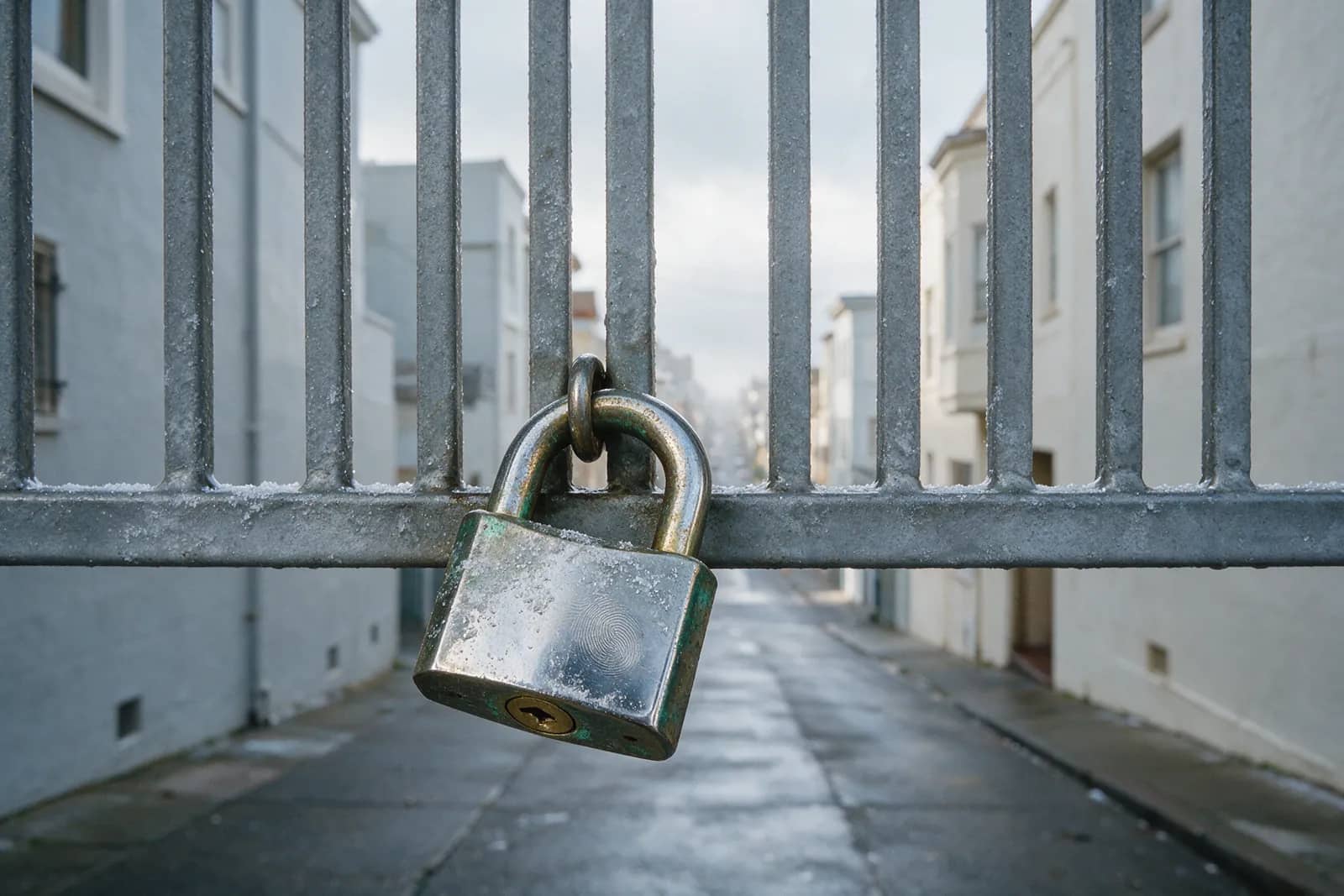
A padlock on a shop grille lives outdoors, all day, all year. On Clement, Irving, Taraval or the ocean end of Judah it takes marine air and windblown sand together. On Mission and Third it takes less of both but still takes them.
The body is usually the last thing to look bad. Stainless or plated shackles stay presentable long after the shackle spring, the pins and the plug inside have started packing up with salt and grit. So the visual check that people do — glance at it, looks fine — is the one check that tells you nothing.
The warning is tactile instead. The key needs a little pressure. The shackle needs a push. It gets ignored because the lock still opens, and it still opens right up until the morning it does not.
Why it is always at opening time
There is a reason these calls land between six and nine in the morning. The lock has been shut all night in the coldest, dampest part of the twenty-four hours, and it is being opened by somebody in a hurry with a delivery arriving.
Cold tightens the tolerances that corrosion has already eaten. Damp does the rest. A lock that opened stiffly at eight the previous evening can be genuinely immovable at seven the next morning, which is why the failure feels sudden even though it was not.
The other thing that happens at that hour is force. A padlock that will not open gets a hard turn, and a key snapped off inside the plug turns a ten-minute job into a longer one. If it is not moving, stop before the key does.
What to fit instead
Marine-grade stainless throughout, including the shackle spring and internals rather than only the visible shell. That is the part cheap outdoor padlocks skimp on, and it is the part that fails.
A shrouded or closed-shackle body helps twice: it resists a bolt cutter and it keeps some of the weather off the mechanism. On a grille facing an avenue with wind straight off the water, that shelter is worth more than the security rating.
And a spare, kept inside, keyed alike. A padlock is a consumable in this environment, and having the replacement already on the premises turns a bad morning into a five-minute inconvenience.
Maintenance that actually works
Dry lubricant, twice a year, and more often within sight of the beach. Graphite or PTFE, not wet oil: on this coast oil collects salt and grit and holds it against the pins, which makes the next year worse rather than better.
Rinse the body with fresh water occasionally if it is somewhere the spray reaches. It sounds fussy and it costs nothing, and it removes the chloride before it settles in.
Then the honest rule: when the key starts needing pressure, replace it on a quiet afternoon. A new padlock is a small cost. A business lockout at $155 to $279 with a truck waiting outside is not, and it always happens on the day you can least afford it.
Quick answers
How long should a grille padlock last on the avenues?+
Outdoors within a mile of the ocean, a couple of years is realistic for a decent one and considerably less for a cheap one. Further inland you get more. Treat it as a wear item with a replacement date rather than a fixture, and it stops surprising you.
Can a seized padlock be opened without cutting?+
Sometimes, and it is always tried first. Once the internals are solid with corrosion there is often nothing to pick, and cutting is faster and cheaper than an hour of trying. Either way the replacement goes on during the same visit rather than leaving the grille unsecured.
Do you handle the grille mechanism too?+
No. The padlocks, the pin locks and the keyed man-door beside it are ours; the grille itself and its motor are a different trade. Say which one has stopped you and you will know before anybody drives out whether the visit is worth making.
Need it handled rather than read about?
(628) 363-2407