The ten-second test
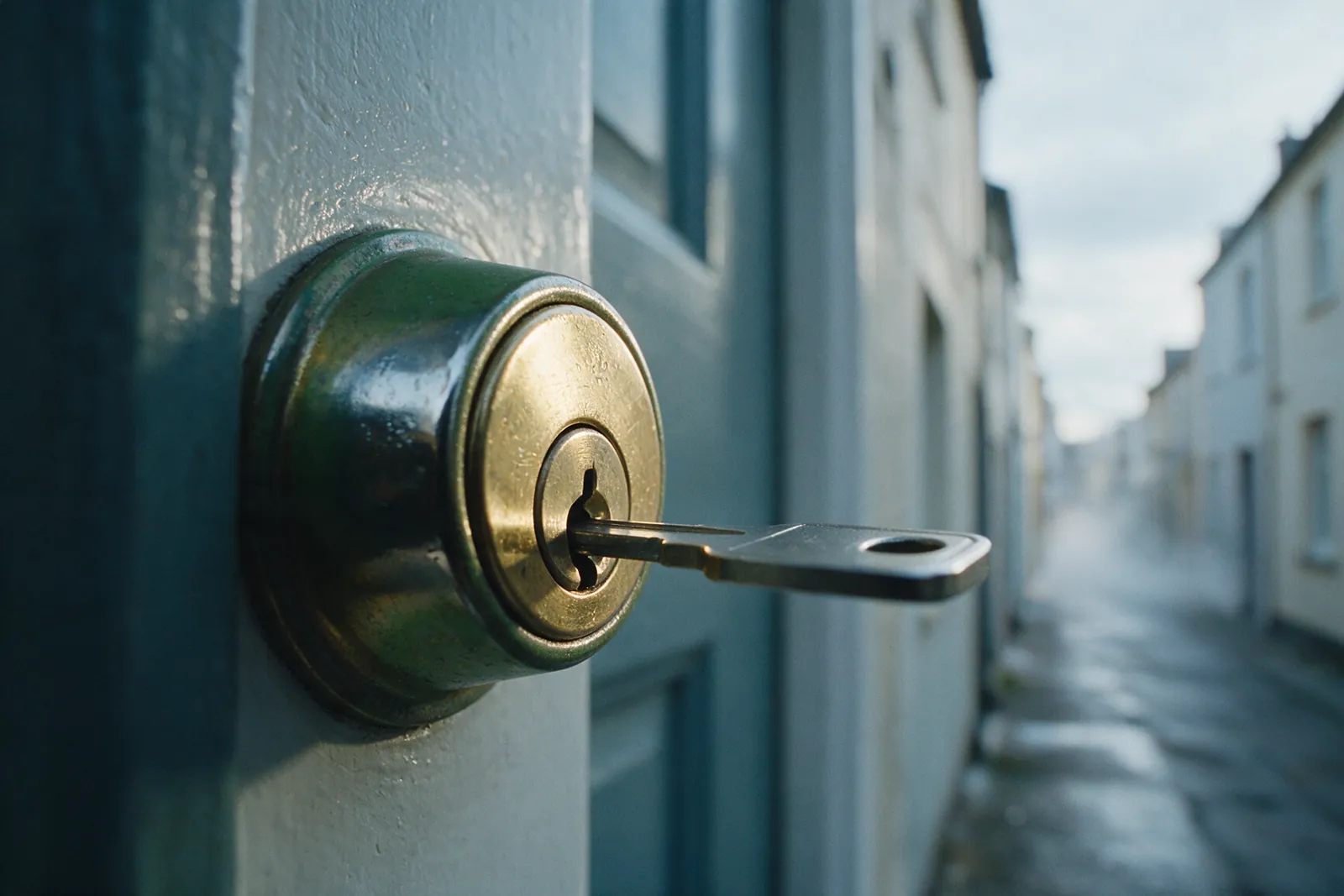
Open the door. Stand on the inside with the door swung wide, and turn the key in the lock with nothing engaged. Then close the door and try again. Almost everything you need to know is in the difference between those two attempts.
If it fights you both times, the problem is inside the cylinder. If it turns sweetly with the door open and jams with the door shut, the lock is fine and the door has moved. Those are two completely different jobs and the second one is much cheaper.
It is worth doing before you phone anybody, ours included. It takes ten seconds and it means the figure you are quoted is the right figure rather than a guess covering both possibilities.
Cause one: the cylinder
If it is stiff with the door open, the pins are not moving freely. West of Twin Peaks that is corrosion nine times out of ten and it arrives on a schedule. East of the hills it is more often simple wear: a keyway with thirty years of blades through it goes loose and sloppy rather than tight, and a worn key in a worn lock eventually finds an angle it cannot get past.
In the first year or two, a strip and clean often fixes it properly and that is a $89 visit. Past that, a replacement cylinder is $28 to $46 fitted into the lock you already have, which is the cheapest real fix on this site.
What does not help is forcing it. The gap between a key that needs coaxing and a key snapped off in the keyway is usually one cold morning, and the snapped version is a $135 to $249 call that starts with you outside.
Cause two: the door has moved
If it turns freely with the door open, the lock is healthy and the bolt is no longer finding the middle of the strike. On a hundred-year-old building on a grade, this is extremely common and it has nothing to do with the lock at all. The building settles, the frame racks by a hair, and the geometry stops lining up.
The tell is that everybody in the household has invented a technique: lift the door slightly, or lean on it, or pull it toward you while turning. Nobody remembers deciding to do that. It usually creeps in over a season.
The fix is moving the strike or reshaping the keeper, and it is part of a visit rather than a purchase. Anyone who quotes you a new lock for this has not looked at your door, and that is worth knowing before you agree to anything.
Cause three: the key itself
A key is softer than the lock it operates and it wears. A copy of a copy of a copy is measurably different from the original, and eventually it is different enough that the pins do not lift to the right heights. This shows up as one key working and another not, which is the giveaway.
If you have an older key that still works well, that is the one to duplicate from, not the one that has been in a pocket for a decade. Cutting from a worn key just copies the wear.
A fresh key cut from code or from a good original costs very little and sometimes ends the whole problem. It is worth ruling out before anybody replaces anything.
Quick answers
The key jams only in cold weather. Is that real?+
Yes. Metal contracts, lubricant thickens, and a cylinder already tight from corrosion loses what little clearance it had. A lock that only fights you in January is a lock that has begun to fail rather than one with a seasonal quirk, and it is worth dealing with before the following winter.
Can I spray something into it?+
Dry graphite or a PTFE lubricant, yes. Wet oil, no, especially on the ocean side: it catches airborne salt and grit and holds it against the pins, so it feels better for a fortnight and is worse afterwards.
Need it handled rather than read about?
(628) 363-2407